


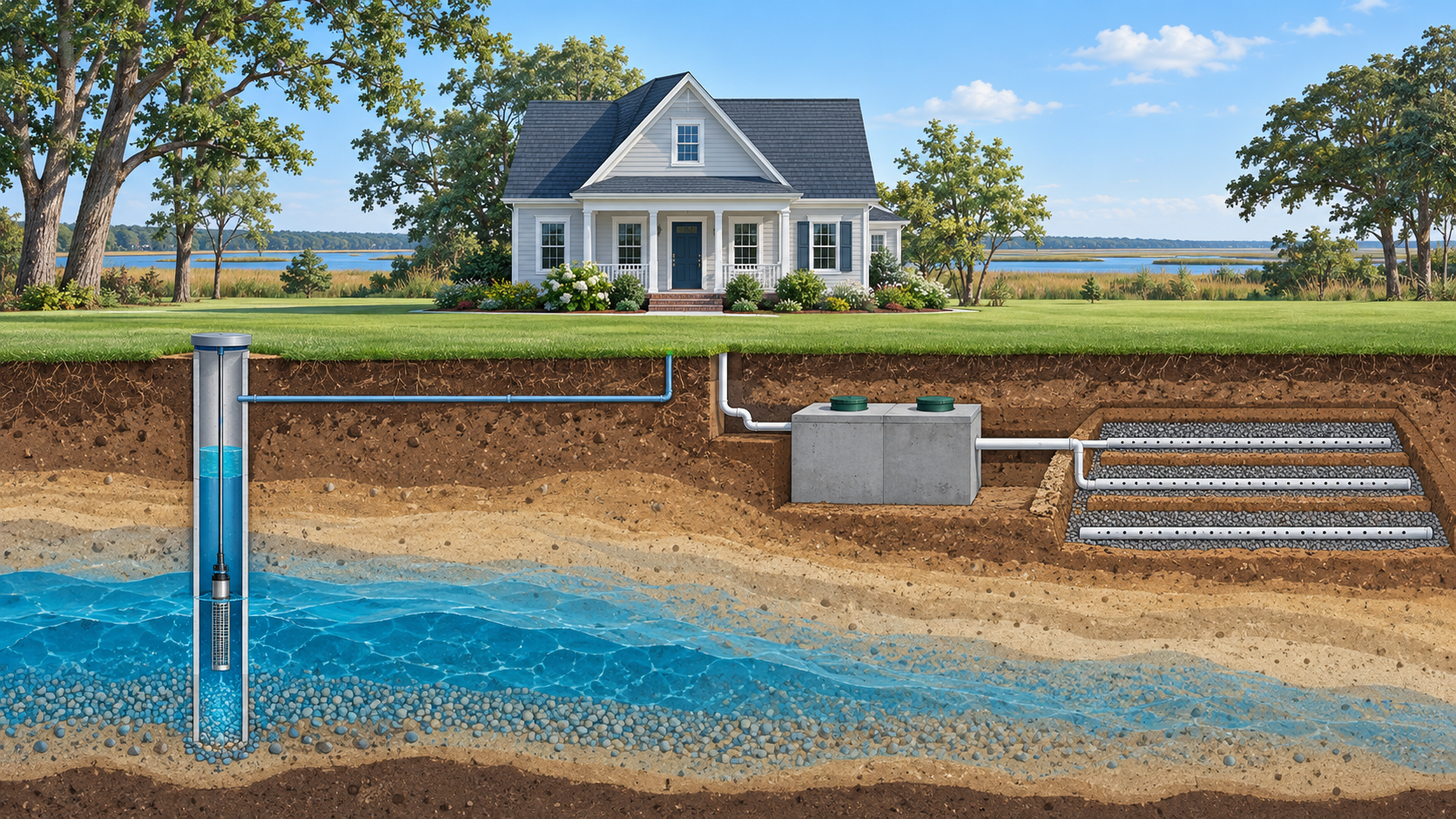
A larger lot, added privacy and room to spread out can make a Suffolk home especially appealing. On some properties, however, the water and wastewater systems deserve just as much attention as the roof, HVAC and foundation.
If a home uses a private well, an onsite septic system or both, the goal is not to become an expert overnight. It is to identify the system, collect the right records and bring qualified professionals into the conversation before your contract deadlines pass.
1. Confirm which systems serve the property
Do not assume that a home has public water and sewer simply because of its address or neighborhood. Ask the seller and listing agent what serves the property, then compare that answer with available records. A home may have public water and septic, a private well and public sewer, or both private systems.
The Western Tidewater Health District, which serves Suffolk, handles private well permits and can provide septic system layouts. That makes the local health department a practical starting point when documents are missing or unclear.
2. Request the septic file, not just the latest receipt
The Virginia Department of Health's homebuyer guidance explains that septic records may include the construction permit, inspection report, operation permit, as-built drawing and maintenance information. Together, those records can show the system type, approved capacity, component locations and whether repairs or upgrades were documented.
A recent pump-out receipt is useful, but it does not answer every question about condition or design. Ask a qualified septic professional what will be inspected, what could not be observed and whether the system appears appropriate for the home as it exists today.
3. Compare capacity with your plans
If you are considering a bedroom addition, conversion or accessory space, raise that plan early. VDH notes that a septic permit identifies the system's design capacity. A future project that increases the intended use of the home may require additional review or system changes.
This is one reason an attractive bonus room should not automatically be treated as a future bedroom. Before making plans, confirm zoning, building and health requirements with the appropriate city and health department offices.
4. Test private well water
Virginia does not generally require well testing simply because a property is being sold, although a lender or locality may have its own requirements. VDH nevertheless recommends that prospective buyers test private well water for basic indicators and bacteriological and radiological concerns. Its Private Well Program also explains that ongoing testing and maintenance become the owner's responsibility.
Ask a qualified laboratory or well professional which tests make sense for the property and how to interpret the results. Water appearance or taste alone is not a substitute for testing.
5. Check Suffolk's pump-out requirements
Some Suffolk properties are within the Chesapeake Bay Preservation Area. The city's Septic Tank Pump-Out Program says systems in that area must be pumped or inspected at least once every five years, using a rolling zone schedule. The city lists Zone 3 as the group notified July 1, 2026, and estimates an inspection or pump-out at approximately $250 to $350, depending on tank size.
That figure is a city estimate, not a quote for a particular property. Confirm whether the home is in the program, whether its current cycle has been satisfied and whether documentation was submitted.
6. Make the inspection part of your timeline
The EPA's homebuyer guide recommends a septic inspection before purchase and identifies items such as maintenance records, tank condition, leakage, backups, the drainfield and distribution box as areas a service provider may review.
Coordinate the septic or well work with your broader home inspection, financing and contract deadlines. If a concern appears, ask what further evaluation is needed and who is qualified to provide it rather than guessing at repair scope or cost.
As you compare Suffolk neighborhoods and current homes for sale, keep the system records with the rest of your due-diligence file. The Morton Group with AtCoastal Realty can help you organize the questions and connect the moving pieces. Contact us about your Suffolk home search.
Sources
- Virginia Department of Health: Buying a House With an Onsite System and Private Well Program. Undated guidance, checked October 11, 2026.
- Western Tidewater Health District: Environmental Health. Undated guidance, checked October 11, 2026.
- City of Suffolk: Septic Tank Pump-Out Program. Undated program page with 2024-2028 schedule, checked October 11, 2026.
- U.S. Environmental Protection Agency: New Homebuyer's Guide to Septic Systems. Undated guide, checked October 11, 2026.