


Published by The Morton Group with AtCoastal Realty | Todd Morton, REALTOR and Owner | November 9, 2026
The practical answer: a city GIS or tax map is a useful research tool, but it is not a current field survey of a specific Hampton Roads property. If a fence, driveway, shed, addition, easement or possible encroachment could affect your decision, ask early whether you need a new survey and what type your lender, title company or project requires.
Do not assume a survey will be recorded with the deed. The Virginia Beach Circuit Court Clerk says its office does not keep individual house location surveys and that Virginia law does not require one to be recorded with a deed.
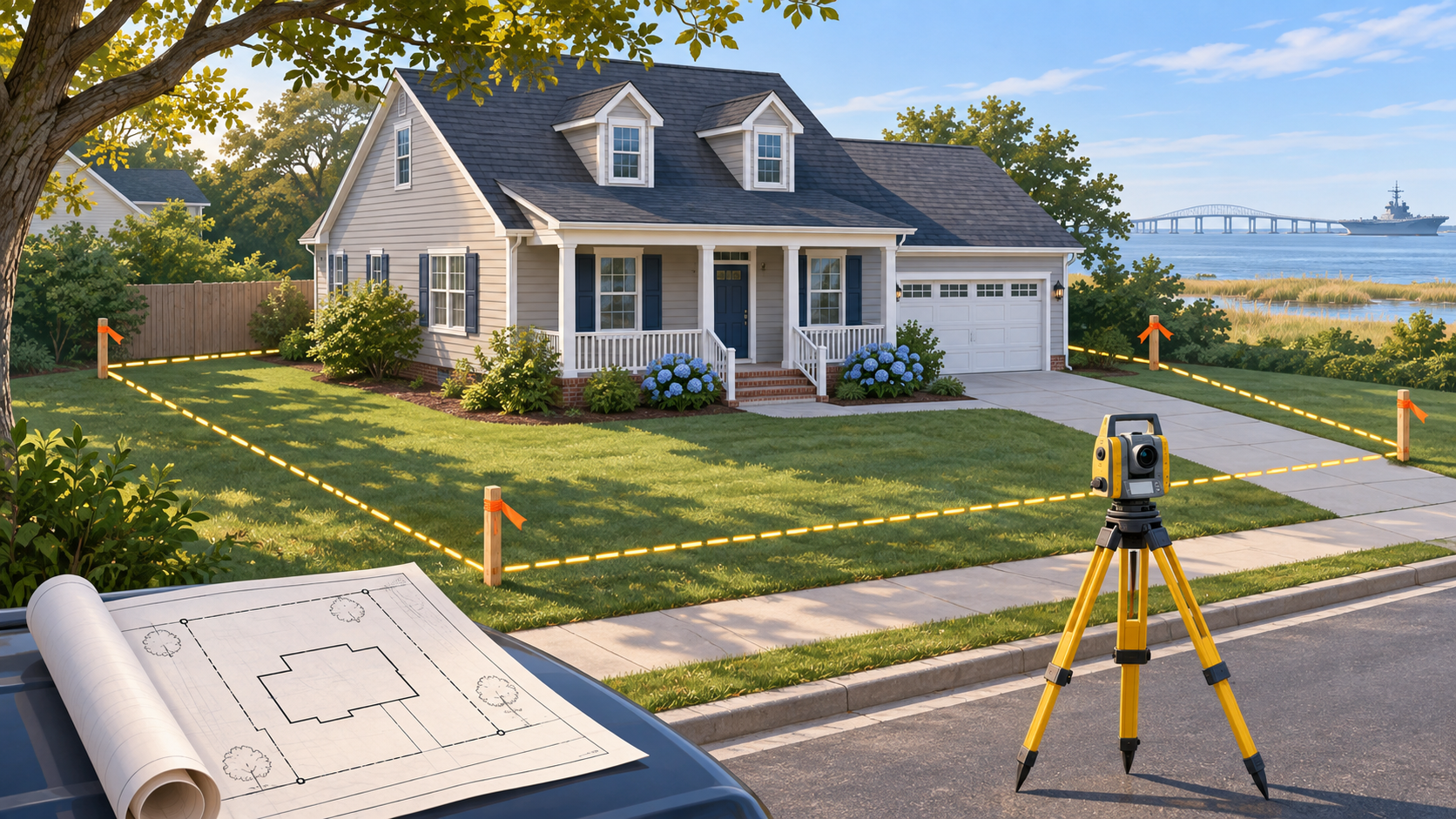
What is the difference between a GIS map and a property survey?
The Virginia Beach Map Center provides public GIS layers for property, planning, zoning and other location research. Those layers can help a buyer understand the general parcel shape and identify questions to investigate. A licensed land surveyor, however, uses deeds, plats, monuments and field measurements to prepare the survey product ordered for a particular property.
| Document or tool | Useful for | Important limitation |
|---|---|---|
| City GIS or tax map | Early parcel and zoning research | Not a current field determination of a legal boundary |
| Older house location survey | Showing conditions when it was prepared | May not reflect later fences, additions or site changes |
| New survey | Answering the defined scope ordered from a licensed surveyor | Scope, detail, timing and cost vary by assignment |
When should a Hampton Roads buyer consider ordering one?
A survey deserves an early conversation when the lot is irregular, waterfront, larger than typical, or shared with long driveways or access points. It may also matter when improvements appear close to a property line, when a neighbor's fence or driveway crosses the apparent boundary, or when the buyer plans a pool, detached building, addition or new fence after closing.
Local permitting is another practical reason. Virginia Beach's fence and wall guidance notes that a physical survey or scaled site plan may be needed and that easement restrictions still apply. That does not mean every purchase or project requires the same survey. It means the planned use should shape the question before closing.
Who should prepare or interpret the documents?
Virginia regulates land surveyors through the Department of Professional and Occupational Regulation. Buyers can use the state's license tools to verify a professional's credentials. Ask the surveyor to explain the proposed scope, deliverable and turnaround time rather than assuming every product includes the same information.
A survey also does not replace legal or title review. Recorded easements, restrictions and ownership issues may require help from the settlement agent, title insurer or a Virginia attorney. The Clerk's Office notes that easements, rights of way and deed restrictions can be difficult to trace, while the title commitment and policy may contain property-specific exceptions that buyers should understand.
What should buyers ask before the closing deadline?
- Does the lender or title insurer require a particular survey product?
- Is an older survey available from the seller, prior settlement agent or surveyor?
- Have improvements been added since that survey was prepared?
- Are there visible fence, driveway, shoreline or structure questions?
- Will a planned project require a survey or site plan after closing?
- How long will the survey take, and who must approve the result?
Local takeaway: in Hampton Roads, the best time to resolve a boundary question is while the contract still gives the parties time to investigate it. Treat the public map as a starting point and choose the professional review that fits the property and your plans.
Comparing locations? Use our Virginia Beach neighborhood map as an orientation tool, then verify property-specific facts independently. For help building a due-diligence timeline around your purchase, contact The Morton Group.
Sources
- Virginia Beach Circuit Court Clerk - Real Estate Records (accessed November 9, 2026)
- City of Virginia Beach - Map Center (accessed November 9, 2026)
- City of Virginia Beach - Fence and Wall Permits (accessed November 9, 2026)
- Virginia DPOR - Land Surveyor Licensing Board (accessed November 9, 2026)
- Consumer Financial Protection Bureau - Shop for Title Insurance and Closing Services (accessed November 9, 2026)
This article provides general educational information, not legal, surveying, title or permitting advice. Requirements and contract rights vary by property and transaction.