


Published by The Morton Group with AtCoastal Realty | Todd Morton, REALTOR and Owner | October 30, 2026
The practical answer: a lender's title insurance policy protects the mortgage lender, not the buyer's equity. An owner's policy is separate coverage for the buyer's ownership interest. Before a Virginia closing, compare both policies, the title commitment and the itemized fees instead of assuming the lender-required policy protects everyone.
Title insurance addresses certain ownership problems that existed before closing, such as an unpaid tax claim or a contractor asserting a prior lien. It is different from homeowners insurance, which generally covers future events affecting the house and personal property.
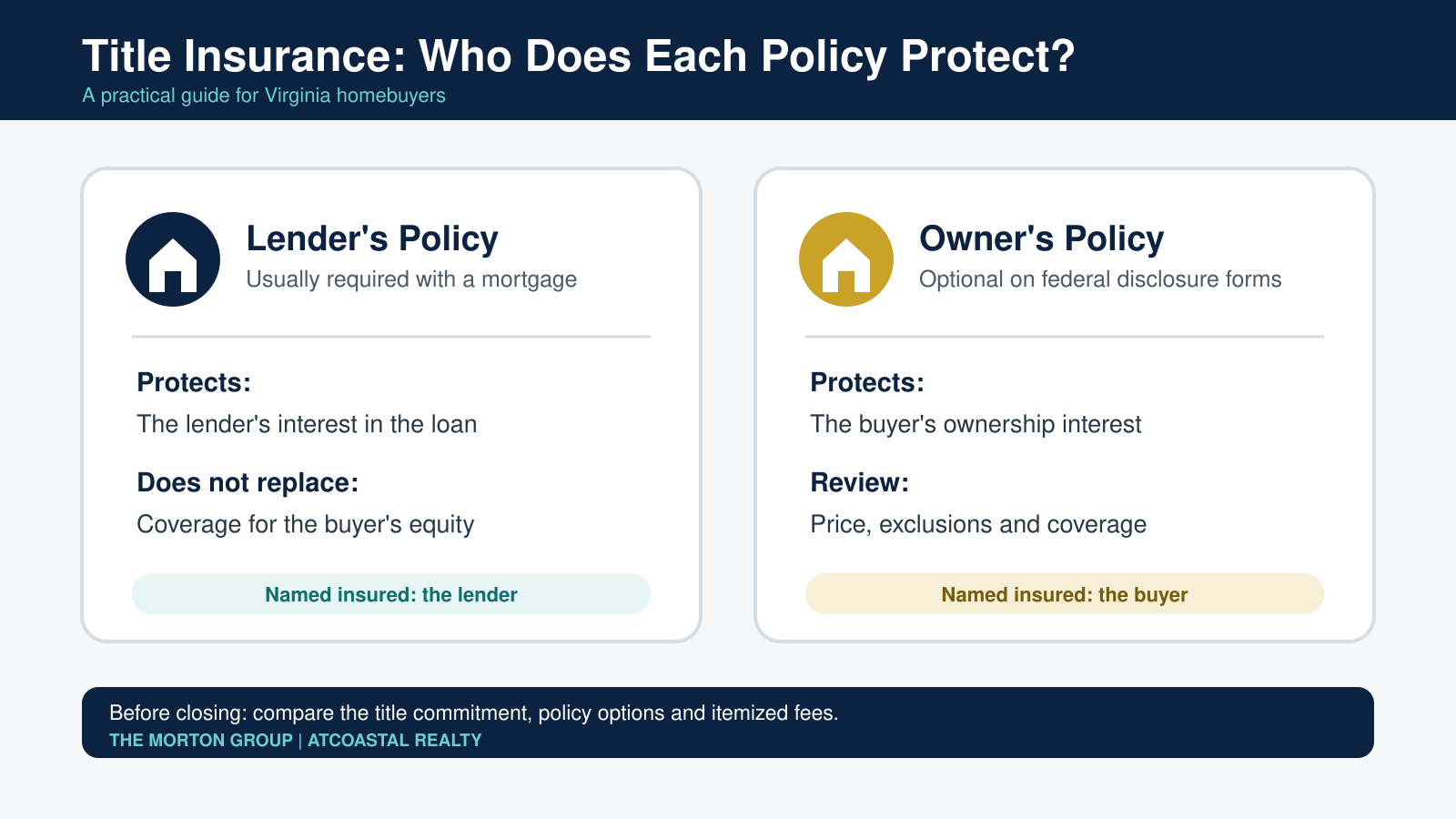
What does a lender's title policy cover?
Most mortgage lenders require a lender's title policy. The Virginia State Corporation Commission explains that the lender is the named insured on the loan policy. The policy protects the lender's financial interest if a covered title problem affects its mortgage.
That protection does not automatically extend to the buyer. The Consumer Financial Protection Bureau states that a lender's policy covers claims affecting the lender's loan, while a buyer needs an owner's policy to protect the buyer's equity from covered title issues.
What does an owner's title policy add?
An owner's policy names the buyer as the insured and is generally a one-time purchase at closing. Federal mortgage disclosure rules label buyer-paid owner's title insurance as optional. Optional, however, describes whether the lender requires the product; it does not mean the lender's policy provides the same coverage.
Coverage depends on the actual policy, endorsements, exceptions and exclusions. A title commitment issued before closing describes the proposed coverage and identifies requirements or exceptions. Buyers should ask the settlement or title professional to explain what will remain excluded after closing. Questions about a suspected defect, ownership structure or legal rights should go to a Virginia attorney.
How do the two policies compare?
| Question | Lender's policy | Owner's policy |
|---|---|---|
| Who is protected? | The mortgage lender | The named homeowner |
| Is it usually required? | Usually, when financing | Usually optional for the buyer |
| What interest is covered? | The lender's loan interest | The buyer's ownership interest, subject to the policy |
| Where should the cost appear? | Loan Estimate and Closing Disclosure | Closing Disclosure and settlement fee detail |
Why can the Closing Disclosure look confusing?
The CFPB notes that federal disclosure calculations can make the owner's and lender's premiums appear different from a title company's itemized paperwork, especially when policies are issued together. That does not necessarily mean a buyer is being charged twice. Add all title-related charges on the provider's itemization and compare the total with the title-related costs on the Loan Estimate and Closing Disclosure. Ask for an explanation of any mismatch before signing.
Borrowers must generally receive the Closing Disclosure at least three business days before closing. Use that time to verify names, loan terms, cash to close and title charges rather than waiting until the settlement appointment.
What should Hampton Roads buyers ask before closing?
Local takeaway: the right questions depend on the property. A condominium, older home, new subdivision or waterfront parcel may present different recorded restrictions, easements or exceptions. Title insurance does not replace a survey, home inspection, flood review or HOA document review; each answers a different question.
- Who is the proposed title insurer, and who is the named insured on each policy?
- What title exceptions will remain after closing?
- Is the quoted owner's coverage standard or enhanced, and what changes between them?
- Are the lender and owner policies being issued together, and how are the premiums itemized?
- Has the deed vesting been confirmed with the appropriate legal professional?
- When will the recorded deed and final title policy be delivered after closing?
Comparing homes across the area? Start with our Virginia Beach neighborhood map. For help coordinating a property-specific offer and closing checklist, contact The Morton Group.
Sources
- Virginia State Corporation Commission - Virginia Consumer's Guide for Title Insurance (accessed October 30, 2026)
- Consumer Financial Protection Bureau - What is lender's title insurance? (accessed October 30, 2026)
- Consumer Financial Protection Bureau - Shop for title insurance and closing services (accessed October 30, 2026)
- Virginia State Bar Real Property Section - Title Insurance Guide (published February 13, 2024; accessed October 30, 2026)
This article provides general educational information, not legal, insurance or settlement advice. Coverage and contract terms vary by policy and transaction.