


The practical takeaway: Freddie Mac's 7.11% weekly mortgage-rate average is useful context, but it is not a rate a Hampton Roads buyer can assume is available today. Bond markets moved higher after the survey window closed, so compare written, same-day Loan Estimates instead of building a budget around one national headline.
Published by The Morton Group with AtCoastal Realty | Todd Morton, REALTOR and Owner | November 15, 2026
What does the 7.11% mortgage-rate headline measure?
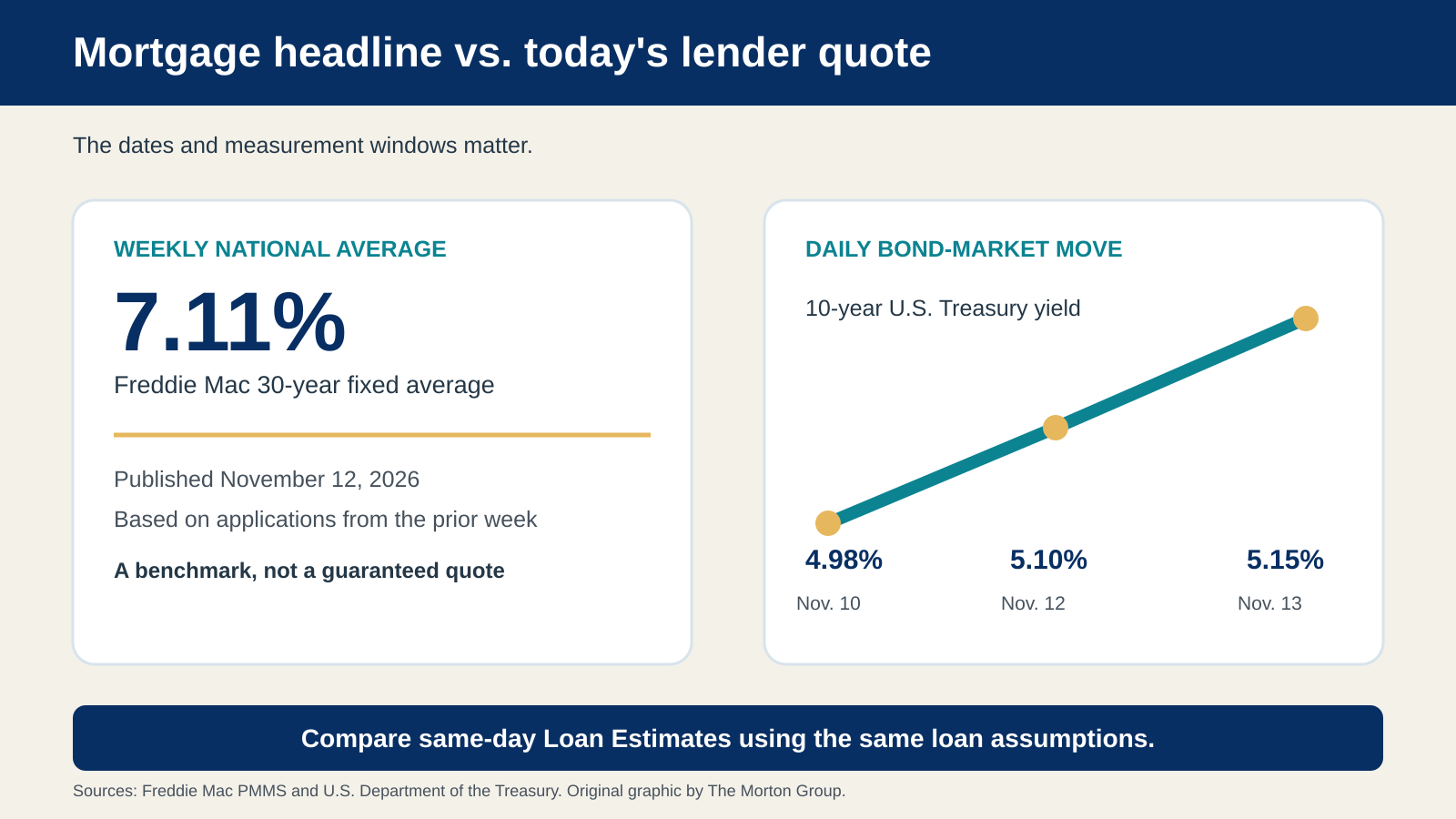
Freddie Mac reported on November 12, 2026, that the national average 30-year fixed mortgage rate fell to 7.11% from 7.18% one week earlier. It was the fourth consecutive weekly decline and the lowest average in seven weeks.
The timing matters. Freddie Mac says its weekly survey is based on qualifying conventional purchase applications submitted through its Loan Product Advisor system from the prior Thursday through Wednesday. The result is a national weekly average, not a live rate sheet, a Hampton Roads market average or a commitment to a particular borrower.
Why might today's lender quote look different?
Mortgage pricing can change as investors react to inflation, employment and Treasury-market movements. The Bureau of Labor Statistics reported November 10 that the Consumer Price Index rose 0.4% in October, while the index excluding food and energy rose 0.3%.
After that release, the 10-year Treasury yield moved from 4.98% on November 10 to 5.10% on November 12 and 5.15% on November 13. Mortgage rates do not move point-for-point with the 10-year yield, but lenders use the broader bond market when setting prices. That is why a weekly average can fall even while a new quote later in the week is higher.
The Federal Reserve adds another layer of confusion. On October 28, the Federal Open Market Committee held its federal funds target range at 3.75% to 4.00%. That is an overnight bank policy rate, not a 30-year consumer mortgage rate.
What should Hampton Roads buyers compare?
- Use the same assumptions. Compare the same loan amount, down payment, program, occupancy, property type and lock period.
- Look beyond the note rate. Review annual percentage rate, discount points, lender credits, cash to close and the "In 5 years" section of each Loan Estimate.
- Confirm the lock. Ask whether the quote is locked, when it expires and what an extension would cost if closing is delayed.
- Refresh the complete payment. Include estimated property taxes, homeowners insurance, mortgage insurance and association dues for the actual home.
Local analysis: A small rate move can change buying power, but it does not tell you whether a specific Virginia Beach, Norfolk, Chesapeake, Portsmouth or Suffolk home is priced competitively. Pair financing quotes with current local inventory and sales context in the Hampton Roads real estate market report.
What does the latest application data show?
Lower rates did draw some buyers back before the inflation-driven bond move. The Mortgage Bankers Association reported November 11 that purchase applications increased 8% for the week ending November 6, although they remained 18% below the same week one year earlier. That is national demand data, not evidence that every Hampton Roads neighborhood became more competitive.
The clearest move is simple: get a current quote, compare it on equal terms and decide from the full monthly payment rather than a headline alone. Contact The Morton Group to connect the financing numbers with current Hampton Roads homes and an offer strategy.
Sources
- Freddie Mac Primary Mortgage Market Survey, November 12, 2026.
- U.S. Bureau of Labor Statistics, Consumer Price Index - October 2026, November 10, 2026.
- U.S. Treasury, Daily Treasury Par Yield Curve Rates, November 10-13, 2026.
- Federal Reserve, FOMC Statement, October 28, 2026.
- Mortgage Bankers Association, Weekly Applications Survey, November 11, 2026.