


The type of water-supply piping in a Hampton Roads home is useful information, but the label alone does not tell you whether the plumbing is good or bad. Buyers should identify the visible material, ask about mixed or replaced sections, review permits when substantial work was done, and let a qualified inspector or plumber evaluate condition and installation.
Published by The Morton Group with AtCoastal Realty | Todd Morton, REALTOR and Owner | November 17, 2026
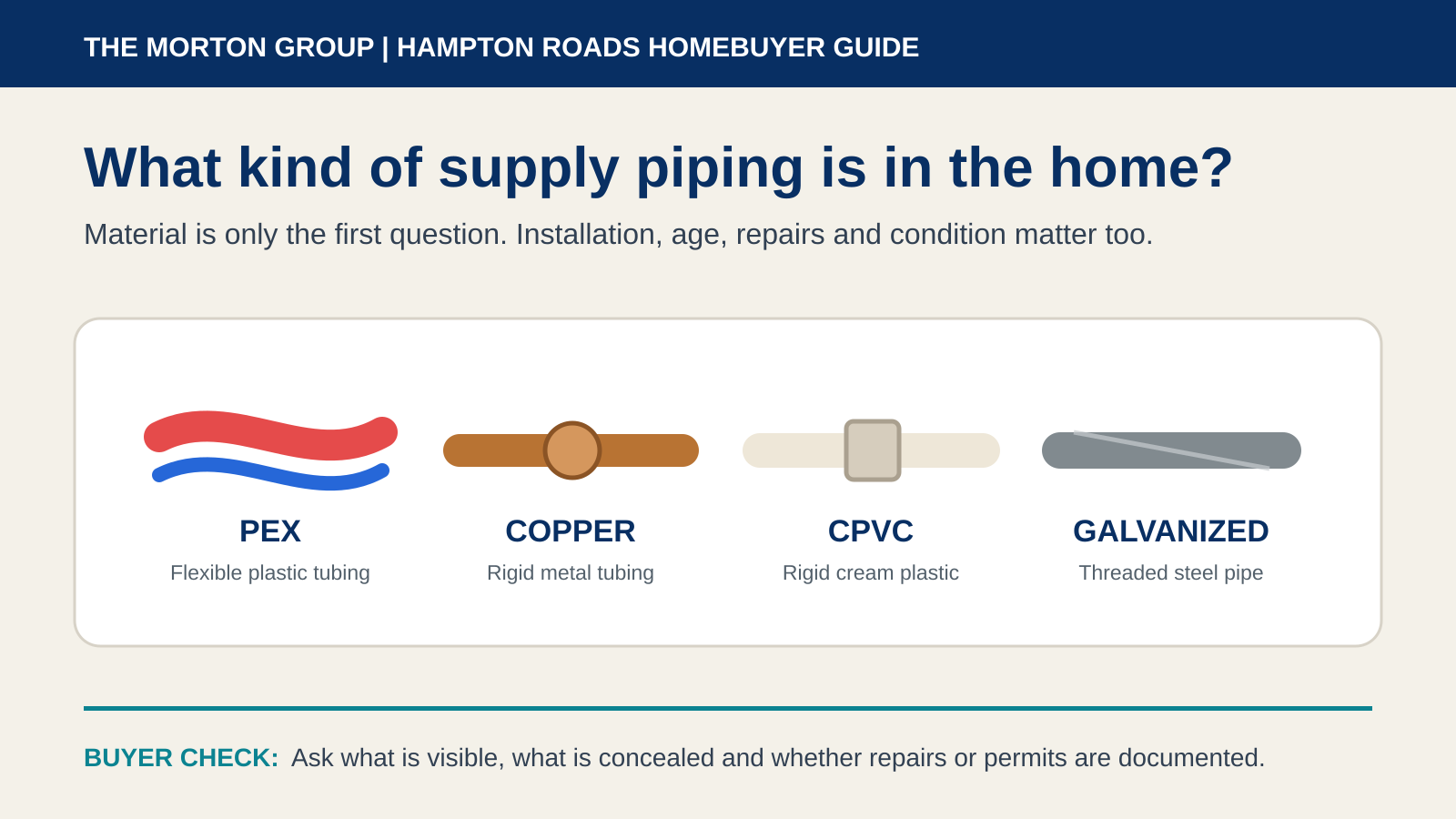
Which plumbing materials might you see?
In accessible areas such as a crawlspace, utility room or under a sink, PEX often appears as flexible red, blue or white tubing. Copper is rigid metal tubing with soldered, pressed or other approved fittings. CPVC is usually rigid cream-colored plastic. Galvanized steel is a gray threaded metal pipe common in some older homes. Drain and vent piping is a separate system, so white PVC under a sink does not identify the home's water-supply lines.
The 2021 Virginia Residential Code, effective January 18, 2024, incorporates standards for multiple approved water-distribution materials, including PEX, CPVC, copper and galvanized steel. That does not mean every installation using one of those materials is automatically compliant or trouble-free. Fittings, support, transitions, workmanship and the product's required standards also matter.
Is PEX better than copper?
There is no universal winner for every house. PEX can reduce the number of fittings hidden in walls and can be routed through tight spaces. Copper is rigid, familiar to many tradespeople and has a long record of residential use. CPVC and galvanized pipe also appear in the local housing stock.
For a buyer, the practical question is not which material wins an internet debate. It is whether the system in this particular home was installed correctly, is showing visible leakage or deterioration, has compatible fittings and transitions, and delivers acceptable performance at the fixtures. A newer repipe can be a positive improvement, but "new plumbing" should still be supported by details about scope, contractor and approvals.
What should the home inspection cover?
Virginia's home-inspection standards include readily accessible plumbing components, water-supply systems and fixtures. The key phrase is "readily accessible." A standard inspection cannot reveal every joint behind drywall or beneath a finished floor.
Ask the inspector to explain which materials were visible, whether more than one material appears, where the main shutoff is located, and whether the accessible system shows leaks, corrosion, damaged supports or questionable transitions. If the findings raise concerns, obtain a licensed plumber's property-specific evaluation before the applicable contract deadline.
When do permits and water testing matter?
Virginia's Uniform Statewide Building Code generally requires a permit before altering a water-supply or distribution system. A small repair and a whole-house repipe are not the same project, so ask the local building department what records should exist for the work described. A permit is not a warranty, but records can clarify what was approved and whether required inspections were completed.
Pipe material also should not be used as a shortcut for judging drinking-water quality. The EPA explains that lead can enter water from service lines, solder, faucets and other plumbing components. Older copper systems may have lead-containing solder, while galvanized pipe can collect lead particles released elsewhere. Testing is the only reliable way to determine whether water contains harmful amounts of lead; appearance, taste and smell cannot answer that question.
A five-question buyer checklist
- What supply-pipe materials are visible, and where?
- Is the home fully repiped or are older sections still concealed?
- Who completed prior plumbing work, and are permits or final inspections available?
- Did the inspector note leaks, corrosion, weak flow, damaged supports or mixed-material transitions?
- Do the home's age, service-line information or household concerns justify water testing?
Local takeaway: Hampton Roads homes span many decades and renovation histories. Two houses with the same pipe material can present very different risks because condition and workmanship are property-specific. Treat the material as the start of the conversation, not the verdict.
Supply piping is also different from the buried drain line. See our guide on when Hampton Roads buyers should consider a sewer scope. For help organizing inspection and document questions around a specific property, contact The Morton Group.
Sources
- 2021 Virginia Residential Code, effective January 18, 2024; accessed November 17, 2026.
- Virginia Administrative Code, 18VAC15-40-130, Home Inspection Report; accessed November 17, 2026.
- Virginia Administrative Code, 13VAC5-63-80, Permit Applications; accessed November 17, 2026.
- U.S. EPA, Frequent Questions About Lead in Drinking Water, updated 2026; accessed November 17, 2026.