


A standard home inspection may not show the condition of the buried sewer line running from a house toward the public system. Hampton Roads buyers should consider discussing a separate sewer-camera scope when the home is older, mature trees are near the line, drains are slow, prior backups are reported, or the inspection raises plumbing concerns.
A scope is not necessary for every purchase, and it is not a guarantee against future problems. Its value is that it can provide additional property-specific information before inspection deadlines expire.
Published by The Morton Group with AtCoastal Realty | Todd Morton, REALTOR and Owner | November 8, 2026
What does a standard Virginia home inspection cover?
Virginia's home-inspector regulations describe an inspection as an evaluation of readily accessible residential components. Plumbing items include interior water-supply lines, fixtures, faucets, and drainage, waste and vent systems. The inspection contract must identify its scope and exclusions, including components that are not readily accessible.
That distinction matters because much of a sewer lateral is underground. A home inspector may test fixtures and observe accessible plumbing, but buyers should not assume the ordinary inspection automatically includes running a camera through the buried line. Ask the inspector exactly what is included in the written agreement.
What can a sewer-camera scope help identify?
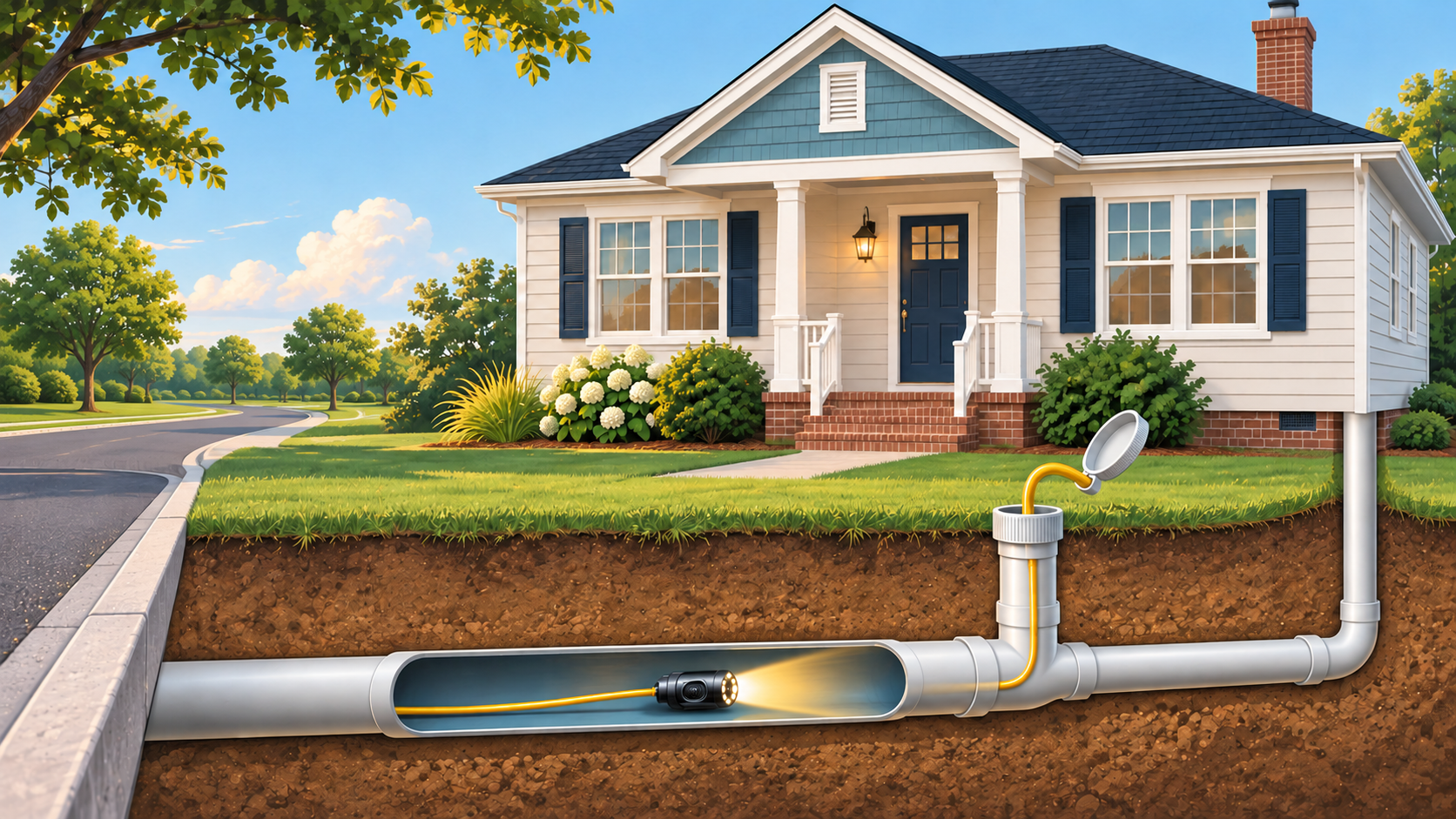
A qualified plumbing or inspection professional typically accesses the line through a cleanout and records the inside of the pipe. Depending on access and conditions, the camera may show visible obstructions, root intrusion, cracks, separated joints, offsets, corrosion, standing water, or sections that could not be viewed.
The result still has limits. A camera view is a snapshot of accessible conditions on that day. It may not establish the exact repair method, ownership boundary, remaining service life, or cost. If the video shows a concern, ask for the recording and a written explanation, then obtain the appropriate specialist's repair opinion before making a contract decision.
When is a sewer scope especially worth discussing?
- An older property: Pipe materials, installation methods and prior repairs can vary with the home's age.
- Mature trees near the likely line: Roots can enter damaged joints or openings, although trees alone do not prove a defect.
- Slow drains, gurgling or recurring clogs: These symptoms deserve investigation rather than an assumption about the cause.
- A reported backup or repair: Request invoices, permits, videos and the location of any replacement.
- No clear cleanout or uncertain route: Access problems can affect what can be inspected and what additional work is needed.
Who is responsible for the sewer line?
Do not rely on a single regional rule. Virginia law distinguishes privately owned sewer laterals from utility-owned lines, while each locality defines where its responsibility begins. Norfolk, for example, directs residents to call Utilities first; if crews clear the line from the cleanout to the main and the stoppage remains, the blockage is in the private line. Virginia Beach also tells residents with a sanitary-sewer problem to call Public Utilities before a plumber so the City can determine whether its infrastructure is involved.
HRSD treats wastewater after local collection systems deliver it and notes that cleanouts are commonly located near the house and near the property line. The exact boundary for a particular address should be confirmed with the local utility, not guessed from the position of the street.
What should a Hampton Roads buyer ask for?
- Confirm whether the normal home inspection includes a sewer camera. If not, ask about a separate scope.
- Identify the cleanout, pipe material when visible, inspection access point and approximate route.
- Keep the video and written findings, not just a verbal summary.
- Ask the locality where public responsibility ends for that address.
- If a defect appears, obtain a qualified repair evaluation and coordinate any contract response before the deadline.
Local takeaway: Hampton Roads has homes built across many decades, and the condition of a buried line cannot be judged from curb appeal or a renovated interior. Treat a sewer scope as targeted due diligence based on the property, symptoms and inspection findings - not as a universal pass-or-fail test.
For a broader look at inspections, see our Hampton Roads termite, moisture and home-inspection guide. If you want help building property-specific due diligence into your offer, contact The Morton Group.
Sources
- Virginia Administrative Code, 18VAC15-40-130, Home Inspection Report, accessed November 8, 2026.
- Virginia Beach Public Utilities, Report a Water or Sewer Emergency, accessed November 8, 2026.
- City of Norfolk, Report a Water or Sewer Problem, accessed November 8, 2026.
- HRSD, Sanitary Sewer Overflow Frequently Asked Questions, accessed November 8, 2026.
- Code of Virginia, Definitions of Private and Sewer-System Laterals, accessed November 8, 2026.