


Published by The Morton Group with AtCoastal Realty
Todd Morton, REALTOR and Owner | November 14, 2026
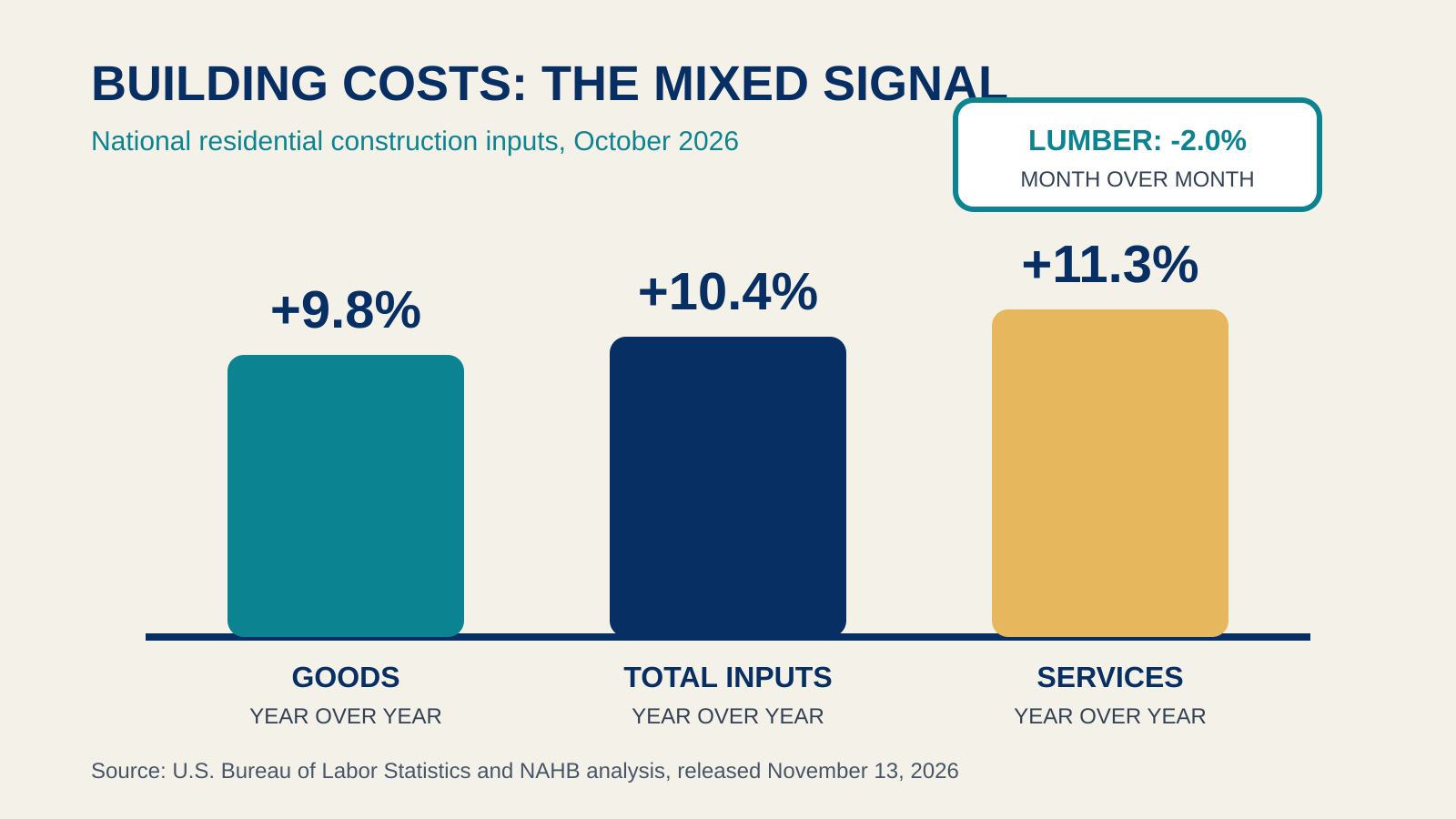
The practical takeaway: Falling lumber prices do not automatically mean a cheaper new home or renovation. Nationally, lumber prices fell 2.0% in October, but the broader index for inputs to new residential construction was still 10.4% higher than a year earlier. Hampton Roads buyers, sellers and homeowners should compare complete written bids rather than judging a project by one material.
What did the October producer-price report show?
The U.S. Bureau of Labor Statistics reported on November 13 that the Producer Price Index for final demand rose 0.3% in October and 6.5% over the 12 months ending in October. Final-demand goods increased 0.5% for the month, while services rose 0.2%.
Housing-specific details were mixed. A National Association of Home Builders analysis found that the combined index for goods and services used in new residential construction rose 0.3% in October and 10.4% from a year earlier. Goods were up 9.8% year over year, while services were up 11.3%.
At the same time, the BLS reported that lumber prices declined 2.0% during October. That is a helpful movement, but lumber is only one part of a project. Labor, transportation, trade services, financing, site work, permits and other materials still shape the final price.
Does the PPI predict a Hampton Roads contractor quote?
No. These are national producer-price indexes, not local retail prices, contractor estimates or forecasts for Virginia Beach, Chesapeake, Norfolk, Portsmouth or Suffolk. The PPI measures average changes in selling prices received by domestic producers. It does not tell you what a specific addition, roof, kitchen or new home should cost.
Our Hampton Roads interpretation: The data explains why a contractor may not reduce a proposal simply because lumber is cheaper. A bid can remain elevated when skilled labor, subcontractor services, delivery costs or other materials are more expensive. Local demand, site access and the home's existing condition add another layer that a national index cannot measure.
What should buyers ask about new-construction pricing?
- Which finishes, appliances and site-work items are included in the base price?
- Can material substitutions or allowances change before completion?
- How are change orders priced and approved?
- Are builder incentives tied to a particular lender or closing company?
- What inspection rights, warranties and completion deadlines are written into the contract?
Do not confuse a national mortgage benchmark with a construction-cost index. Freddie Mac's November 12 survey put the average 30-year fixed mortgage rate at 7.11%. That affects financing, while the PPI describes price movement upstream in the economy. Neither is a personalized loan quote or a local builder's price sheet.
How should sellers approach renovations before listing?
Start with the likely market impact, not the size of the project. Obtain itemized proposals with the same scope, materials and payment schedule so the bids can be compared fairly. Ask how long pricing is valid and what could trigger an adjustment. Then compare the cost, completion time and disruption against a smaller repair plan or selling in current condition.
Broader inventory and buyer-leverage conditions also matter when deciding how much work to complete. Review the latest Hampton Roads real estate market report for local context rather than applying national construction data directly to your neighborhood.
If you are weighing a renovation, a new build or a sale in current condition, contact The Morton Group for a property-specific comparison.
Sources
- U.S. Bureau of Labor Statistics, Producer Price Indexes - October 2026, released November 13, 2026.
- NAHB Eye on Housing, Building Material Price Inflation Remains High Despite Energy Price Declines, published November 13, 2026.
- Freddie Mac Primary Mortgage Market Survey, November 12, 2026.