


Published by The Morton Group with AtCoastal Realty | Todd Morton, REALTOR and Owner | October 18, 2026
The practical answer: If you are buying a Virginia home in a condominium or homeowners association, the resale certificate is one of your most important due-diligence packages. It can reveal the real monthly cost, pending special assessments, reserve funding, insurance responsibilities, rental restrictions, violations and litigation. Read it promptly because your purchase contract may give you only a short review period.
What is a Virginia resale certificate?
Virginia consolidated the former condo resale certificate and property owners association disclosure packet into one standardized "resale certificate" system effective July 1, 2023. The certificate includes a summary form plus supporting documents. It is intended to help a buyer understand the association, the property and the obligations that come with ownership.
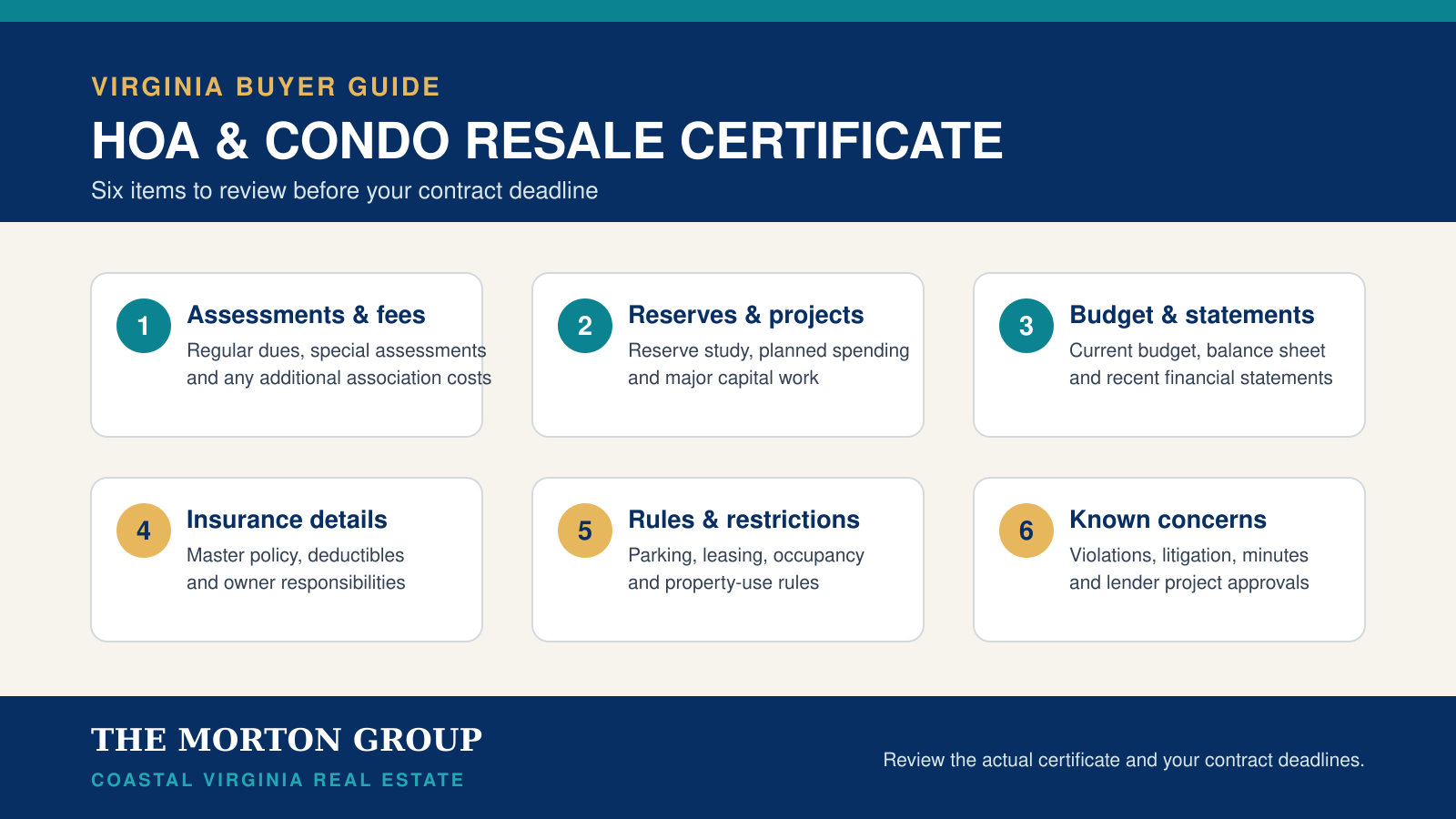
The exact package can be lengthy, but Virginia law specifies what it should contain. The following six review areas turn that stack of documents into a practical buyer checklist.
1. What will the association actually cost?
Start with regular dues, their payment schedule and any separate charges owed to another association or facility. Then look for approved special assessments and unpaid amounts attached to the unit. A quoted monthly fee may not capture every recurring or near-term obligation.
The Consumer Financial Protection Bureau notes that association dues are usually paid directly to the association rather than included in the mortgage-servicer payment. Include them in your full housing budget from the beginning.
2. Are reserves and major projects clearly documented?
Review the current reserve balance, the reserve study and any approved capital spending. Compare the age of major common elements - such as roofs, elevators, roads, bulkheads or exterior systems - with the projects identified in the documents. A reserve figure is more meaningful when viewed beside the work the association expects to fund.
3. What do the budget and recent statements show?
Virginia's required contents include the current operating budget, balance sheet, and income and expense statement, if available. Look for rising expenses, unpaid assessments and significant differences between planned and actual spending. These documents do not predict a future assessment, but they can help you ask better questions before your review deadline.
4. Who insures what?
Read the association's coverage summary and any statement describing insurance the owner should or must carry. Pay particular attention to deductibles and whether the governing documents can make an owner responsible for all or part of one after a claim.
For Hampton Roads buyers, this deserves property-specific follow-up. Ask your insurance professional how the master policy, your individual policy and any flood coverage would work together. Do not assume one building or community has the same exposure or coverage as another.
5. Do the rules fit your plans?
Check the governing documents and rules for parking and vehicle limits, leasing restrictions, occupancy provisions, home-business rules, alteration procedures and other property-use requirements. If you plan to rent the home, keep a boat or work vehicle, renovate, or operate a business, confirm the actual written rule rather than relying on a listing description or casual answer.
6. Are there violations, litigation or approval concerns?
The certificate should address known violations affecting the unit or common property, material pending litigation, recent meeting minutes and known project approvals from secondary mortgage-market agencies. Read the minutes for issues that may not be obvious from the budget alone. Your lender should also review any project-level requirements early, especially for a condominium.
How long does a Virginia buyer have to review it?
Your contract controls the agreed review period. If the contract does not specify one, Virginia Code Section 55.1-2312 generally provides three days from ratification when the certificate was delivered before ratification, or three days from receipt when it arrives afterward. Written cancellation rules also apply. The association normally has up to 14 days after a written seller request to deliver the certificate, but that delivery window is not the same as the buyer's contract review window.
Dates and contract language matter, so discuss the package promptly with your real estate agent and, when legal interpretation is needed, a Virginia real estate attorney. This guide is educational and is not legal advice.
The Hampton Roads takeaway
An association can provide valuable shared maintenance and amenities, but the resale certificate tells you what you are agreeing to financially and operationally. Review the whole package, write down unanswered questions and obtain insurance and lender feedback before your deadline. If you are comparing locations, our Virginia Beach neighborhood map can help you explore communities before narrowing your search.
Buying in an HOA or condominium? Contact The Morton Group for help building a property-specific due-diligence checklist.
Sources
- Virginia DPOR: Resale certificate changes effective July 1, 2023 (accessed October 18, 2026)
- Code of Virginia Section 55.1-2310: form and contents (current through October 15, 2026)
- Code of Virginia Section 55.1-2309: delivery (accessed October 18, 2026)
- Code of Virginia Section 55.1-2312: purchaser cancellation (current through October 16, 2026)
- CFPB: HOA dues and mortgage payments (reviewed September 11, 2024)